James
James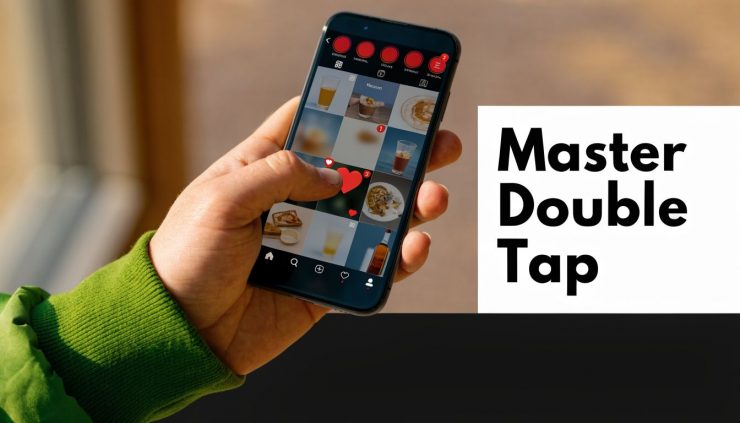
Most advice about the Instagram double tap is outdated because it treats likes as the whole game. They aren't.
The double tap instagram gesture still matters because it's fast, native, and frictionless. But if you're managing an account in a serious way, you shouldn't read it as the final verdict on content quality. You should read it as an early signal. It tells you whether a post earns immediate approval fast enough to help everything that comes after.
That distinction matters for planning. A post can earn plenty of likes and still do little for brand intent. Another post can attract fewer likes but trigger comments, shares, or saves that carry more strategic value. The right move isn't to stop caring about double taps. It's to understand what they do well, where they fall short, and how to build content that uses them as a springboard instead of a vanity metric.
The Evolving Role of the Instagram Double Tap
For years, teams treated likes as the cleanest performance metric on Instagram. That made sense. The action is built directly into the platform's user experience. A person taps twice on a photo or video post, the heart animation appears, and the like count increases. It became one of the most visible engagement signals on the app and an easy benchmark for creators, agencies, and brands.
That old habit still shows up in reporting. A lot of dashboards make likes feel like the headline number because they're immediate and easy to compare across posts.
But Instagram's own direction tells you not to stop there. As noted in SocialCat's summary of Instagram's August 2023 test, the platform was testing a design that prominently displays comment and share counts alongside likes, which reflects a shift away from pure vanity metrics and toward broader engagement quality.
Practical rule: Treat likes as the first read on creative strength, not the final read on business value.
That's the strategic update often required. The double tap hasn't become irrelevant. It's become contextual. A high-like post may have strong visual packaging, fast recognition, or a clear emotional cue. That's useful. But if you're building an account for reach, retention, or conversions, you need to judge the double tap in relation to deeper actions.
The mature view is simple. Likes still tell you whether the post landed quickly. They just don't tell you everything that matters.
The Anatomy of an Instagram Double Tap
The Instagram double tap is the platform's quickest form of approval. On a standard post, a user taps twice in quick succession, sees the heart animation, and registers a like. That's why it became so central to Instagram behavior. It removes friction. People don't need to pause, think, or type. They just react.
I explain it to new team members like this. A double tap is a quick nod of approval. It says, "I like this," but not much more.

How it compares to deeper actions
That "quick nod" matters because every other interaction carries a different weight in practice.
- A comment asks for thought. The user slows down and adds language.
- A share acts more like a recommendation. The user puts your content in front of someone else.
- A save works like a personal bookmark. The user wants the post for later.
- A follow signals ongoing interest, not just momentary approval.
This is why teams get into trouble when they optimize only for easy reactions. It's possible to produce content that earns a lot of instant likes because it looks familiar, polished, or emotionally obvious, while doing much less to build recall or intent.
Where marketers misread the signal
A double tap is strongest when the viewer can understand the post in a split second on a mobile feed. That's why simple visuals, recognizable formats, and clean first-frame composition matter so much.
If a user needs to decode the creative before reacting, you've already reduced the odds of a fast like.
That doesn't mean every post should be shallow. It means the packaging should be immediate. The deeper message can live in the caption, the carousel sequence, or the follow-up action you want next.
So yes, the double tap instagram mechanic is simple. The mistake is assuming simple means unimportant, or assuming important means sufficient. It's neither.
How Double Taps Still Drive Algorithmic Reach
Likes still matter because they're one of the fastest signals a post can collect after publishing. That speed is what gives the double tap ongoing strategic value. When users react quickly, Instagram gets an early indication that the content deserves more attention.
The useful concept here is like velocity. Social media guidance summarized by Quso's explanation of the double-tap mechanic notes that higher like velocity can improve a post's visibility and may contribute to stronger algorithmic ranking and broader exposure. The logic is straightforward. Easier gesture → more likes captured per impression → stronger engagement rate → better odds of algorithmic amplification.
A lot of teams overcomplicate this. They look for secret hacks when the first layer is basic. If the post is instantly legible and emotionally clear, people are more likely to react without hesitation. That early reaction helps distribution.
To visualize the process, use this mental model:

What this means for publishing decisions
In practice, this affects three things more than most new marketers realize.
- Your first frame matters most. If the image, cover, or opening moment doesn't register immediately, you lose the easiest interaction.
- Your posting time affects the speed of response. A good post published when your audience is absent won't build early momentum the same way.
- Your call to action should match the post type. Some posts deserve "double tap if this is you." Others should ask for a save or share instead.
For teams working heavily in short-form video, this logic overlaps with broader ranking behavior. EvergreenFeed's guide to the Instagram Reels algorithm is useful if you're mapping how early engagement connects to visibility in a video-heavy content mix.
Later engagement still matters. So do shares, comments, and saves. But the double tap often starts the chain because it's the lowest-friction action.
Here's a simple way to think about it.
A post doesn't need a like to be valuable. But if it can't earn quick likes, it usually needs exceptional depth elsewhere to compensate.
That trade-off is why polished visual execution still pays off. Not because likes are everything, but because they help content survive long enough to earn stronger actions from the right viewers.
A quick walkthrough helps make that easier to spot in the feed:
Actionable Tactics to Earn More Double Taps
The fastest way to earn more likes isn't to beg for them. It's to make the post easy to approve at a glance. That's what the biggest engagement-oriented themes on Instagram have always done. As Undullify's review of Instagram hashtag patterns notes, #love had 1.221 billion posts and #instagood had 704.1 million posts, which shows how heavily the platform grew around broad visual appeal and instant recognition.
That doesn't mean you should copy generic aesthetic content. It means you should understand the operating principle behind it. High-performing posts usually reduce decision time. The viewer knows what they're seeing, how to feel about it, and whether to react. Fast.
Build for instant recognition
When I audit underperforming posts, the common problem isn't usually effort. It's ambiguity. The creative asks too much from the viewer in the first second.
Use these checks before publishing:
- Lead with one clear subject: A cluttered frame lowers instant comprehension.
- Increase visual contrast: If the focal point blends into the background, users keep scrolling.
- Choose recognizable formats: Before-and-after, quote cards, reaction memes, product closeups, and satisfying process visuals all reduce interpretation time.
- Front-load emotion: Surprise, delight, relatability, aspiration, and humor all support fast reactions.
Write captions that support the like
Captions don't drive the first impression, but they can reinforce it. The mistake is writing captions that ask for too much too soon.
Short prompts often outperform clever but indirect copy when your goal is the like:
Double tap if you've dealt with this.
That works because it's specific, low effort, and emotionally legible. It turns the like into an identity signal. The user isn't just approving the post. They're agreeing with it.
Use direct prompts selectively. If every caption asks for a double tap, the account starts sounding needy. Reserve them for posts where agreement or recognition is the main emotional response.
Match the tactic to the content type
Not every format earns likes in the same way. Here's a working cheatsheet I use when planning for immediate engagement.
| Tactic Type | Description | Example Prompt |
|---|---|---|
| Visual hook | Use a strong first-frame image or cover that can be understood instantly on mobile. | Double tap if this caught your eye immediately |
| Relatability | Turn a common frustration, habit, or inside joke into a post people recognize themselves in. | Double tap if this is painfully accurate |
| Aspiration | Show an outcome people want, such as a polished brand look, clean setup, or finished result. | Double tap if this is the goal |
| Simplicity | Strip the design down so the main point lands before the user reads the caption. | Double tap if simple wins |
| Timeliness | Publish when your audience is active so quick reactions can stack early. | Double tap if you're seeing this at the right time |
| Social proof framing | Present a widely felt opinion that invites agreement without demanding a long comment. | Double tap if you agree |
| Satisfying motion | Use subtle movement or a clean reveal that rewards a split-second pause. | Double tap for the final result |
| Niche identity | Speak directly to a small but recognizable audience segment. | Double tap if you're the one who always notices this |
If you're planning these at the hashtag and discovery level too, EvergreenFeed's guide on how to hashtag on Instagram is a useful companion because discoverability and immediate reaction often work together.
What usually doesn't work
Likes drop when the creative is overdesigned, the message is delayed, or the ask is mismatched.
Common examples:
- Dense educational slides as standalone first impressions: Better for saves than instant likes.
- Captions that bury the point: Users won't work hard before reacting.
- Generic engagement bait: "Like this post!" with no emotional reason behind it rarely helps.
- Visually weak reposts: If the asset looks secondhand, the double tap rate usually suffers.
A strong rule for creative reviews is this. If a teammate can't explain why someone would like the post within a few words, the audience probably won't either.
The Evergreen Scheduling Advantage for Consistent Likes
Many content creators overvalue spikes and undervalue consistency. One standout post feels good, but it doesn't build a reliable engagement pattern by itself. If you want a steady baseline of likes, you need a publishing system that gives strong content multiple chances to meet the right audience at the right moment.
Evergreen scheduling becomes practical, not theoretical. Some posts have durable appeal. They aren't tied to a deadline, trend, or launch window. They solve a recurring problem, express a stable brand belief, or showcase an asset that still looks relevant weeks later. Those are the posts worth cycling intelligently.
Why consistency beats one-off wins
The double tap is highly sensitive to timing and context. A good post can underperform because it reached followers during a quiet window. Republishing evergreen content later, with fresh packaging when needed, gives that asset another opportunity to earn fast reactions.
That matters for teams with limited design bandwidth. You don't always need more content. You often need better distribution of the content you already have.
Three practical benefits come from this approach:
- More chances at early engagement: Every scheduled repost creates another opening for immediate likes.
- Better use of proven assets: Content that already showed appeal remains in circulation instead of disappearing after one run.
- A steadier account rhythm: Consistent activity supports audience expectations and keeps your publishing calendar from going dark.
How to operationalize it
Start by separating posts into buckets. One bucket for evergreen education. Another for testimonials or product use cases. Another for light engagement content. Then schedule those categories to appear at recurring times based on audience behavior and content type.
A tool like EvergreenFeed's Instagram automation workflow supports this by organizing evergreen posts into buckets and pushing them through Buffer on preset schedules. That's useful when you want old winners to keep working without manually rebuilding the queue every week.
The hidden advantage of scheduling isn't convenience. It's repeat exposure for content that still deserves attention.
The trade-off is real, though. You can't automate lazily. If you recycle stale visuals, outdated references, or captions that no longer fit the moment, the audience notices. Evergreen doesn't mean untouched forever. It means structurally reusable with periodic refreshes.
For marketers, the healthiest standard is this. Keep your reactive content manual. Automate your durable content. That balance gives you room for timely publishing without letting your baseline engagement depend on constant last-minute creation.
Troubleshooting Common Double Tap Problems
Not every search about double tap instagram comes from a marketer. A lot of people are trying to solve a very practical problem. They keep liking posts by accident.
The useful nuance is that the gesture is app-specific, not device-wide. According to Alibaba Life Tips' guide on avoiding accidental Instagram likes, at least one guide claims the double-tap like can be turned off in Instagram settings without affecting double-tap behaviors elsewhere on the phone. That matters because many users assume they'd need to change a phone-wide gesture setting.
If you're dealing with accidental likes
Try this sequence:
- Check Instagram settings first: Look for interaction or accessibility-related controls before changing anything on your phone.
- Test inside the app only: Confirm whether the issue is isolated to Instagram.
- Update the app: Gesture bugs sometimes come from outdated versions.
- Restart and retest: Basic, but it often clears temporary interaction glitches.
If double tap isn't working properly
Sometimes the opposite problem appears. Users double tap and nothing happens, or the like behavior feels inconsistent.
Use a simple checklist:
- Connection issue: Weak connectivity can delay or fail the action.
- App lag: Close and reopen Instagram.
- Temporary bug: Install the latest version and test again.
- UI confusion: On some posts, users may not realize the tap registered if they're scrolling quickly.
If the feature breaks in one app but works normally elsewhere on the phone, troubleshoot the app before the device.
If like counts seem less central than they used to, that's partly product design and partly strategy. The platform has moved toward showing richer engagement context. So even when the mechanic works perfectly, the metric doesn't stand alone the way it once did.
Conclusion Beyond the Double Tap
The Instagram double tap still earns its place in every content review because it captures immediate audience approval with almost no friction. That's why it remains useful for diagnosing visual strength, first-frame clarity, and early momentum.
But mature strategy doesn't stop at the like count. The better question is what the like leads to. Does it help the post gain visibility? Does it support comments, shares, or saves? Does it fit the job the content was meant to do?
That's the fundamental shift. The double tap hasn't disappeared in importance. Its role has narrowed and become more specific. Use it to judge instant appeal. Use deeper signals to judge lasting value. Teams that understand both sides usually make better creative decisions and build healthier Instagram performance over time.
If you want a cleaner way to keep strong Instagram posts in circulation, EvergreenFeed helps teams organize evergreen content, schedule recurring post buckets through Buffer, and maintain a consistent publishing rhythm without rebuilding the calendar by hand.

 Leiann