James
James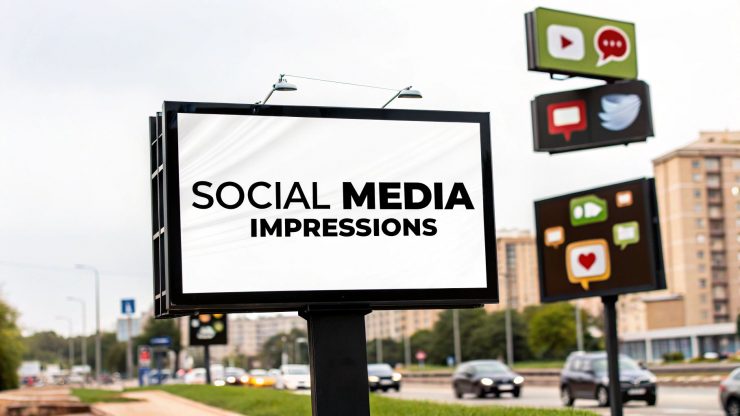
Ever wondered what social media platforms mean when they talk about "impressions"? Let's break it down.
An impression is simply the total number of times your content shows up on someone's screen. That’s it. If one person scrolls past your post five different times throughout the day, that single user just gave you five impressions.
What an Impression Really Tells You
Think of it like a billboard on the side of a highway. Every time a car passes by and the ad is visible, that's an impression. It doesn't matter if it's the same person driving to work in the morning and then home again in the evening—each time they see it, it counts.
This number is the most basic sign that your content has made it into the digital world. It's the first step, confirming your post successfully loaded in someone's feed and had a chance to be noticed.
Why This Simple Number is a Big Deal
Impressions might seem like a soft "vanity metric" at first, but they're actually a crucial starting point for understanding how your content is doing. A high impression count is your first clue that the platform's algorithm is picking up your content and putting it in front of people. Before anyone can like, share, or click, they have to see it first.
An impression is the first domino to fall. Without it, there's no opportunity for engagement, no chance to drive traffic, and no way to turn followers into customers. It’s the very top of your social media funnel.
Tracking impressions helps you get a quick read on some important questions:
- Is my content even getting out there? Low impressions are an immediate warning sign that you might be fighting the algorithm or posting at the wrong times.
- When is my audience actually online? If you see a big spike in impressions after posting at a certain time, you've likely found a sweet spot in your schedule.
- What kind of content does this platform like? By comparing impressions on your videos, images, and text posts, you can quickly see what the algorithm tends to favor.
Ultimately, understanding what social media impressions are is all about measuring opportunity. It shows you how many chances your message had to connect, which is the foundation for everything else you want to achieve.
Impressions vs Reach vs Engagement
Diving into social media analytics can feel a bit like alphabet soup, with terms like impressions, reach, and engagement thrown around constantly. It’s easy to see them as the same thing, but they each tell a very different story about how your content is performing. Getting this right is the cornerstone of any solid social media plan.
Let's break it down with a simple analogy: imagine you’re promoting a local concert.
- Reach is the number of unique individuals who see your post. Think of this as the total number of people who actually attended the concert. One person, one count.
- Impressions are the total number of times your post is displayed. This is like how many times your concert flyers were seen around town—one person might see the same flyer three times. Each time counts as an impression.
- Engagement is any interaction with your content—likes, comments, shares, you name it. This is the applause, the cheering, and the social media shoutouts during and after the show.
This flow chart gives a great visual of how a single view from one user translates into an impression.
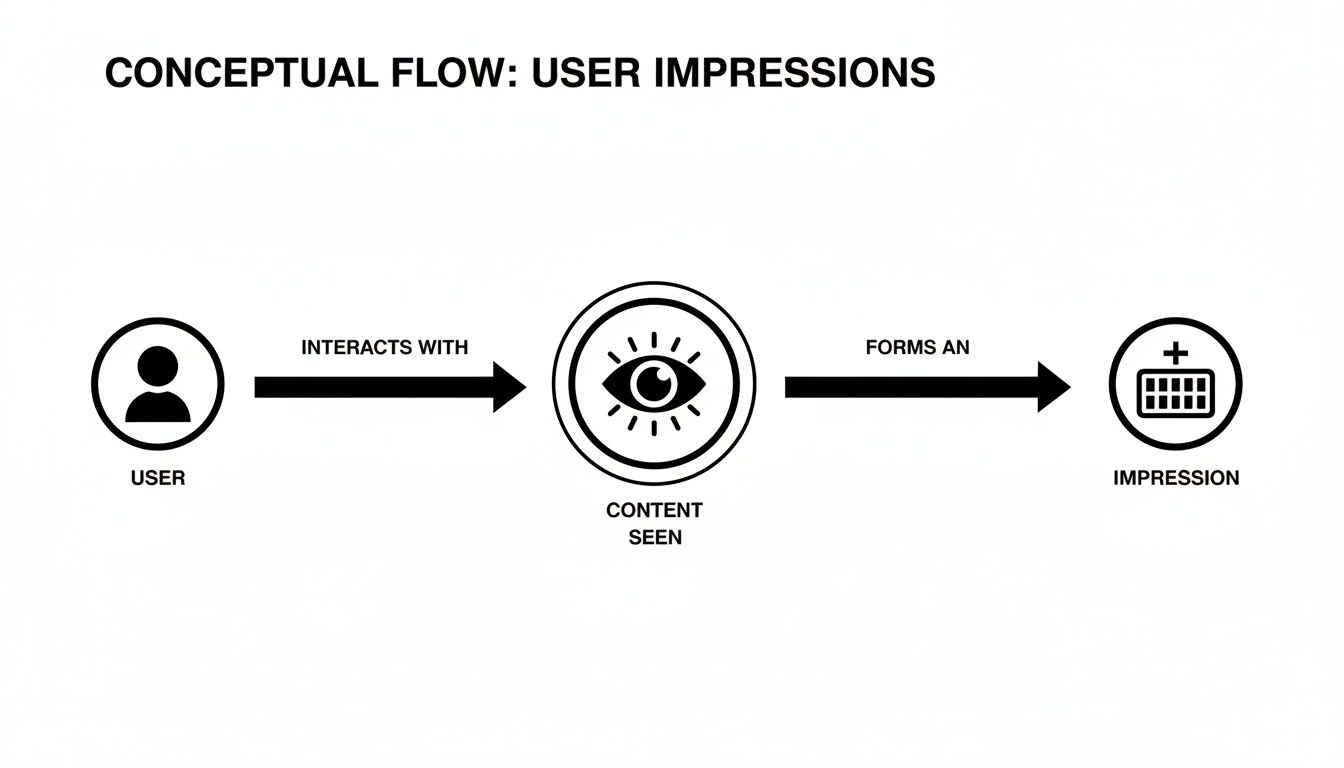
As you can see, the impression is the most basic building block. It’s the first touchpoint, the moment your content appears on a screen, setting the stage for everything that comes after.
To help you keep these straight, here’s a quick-glance table comparing the three.
Impressions vs Reach vs Engagement at a Glance
This table provides a clear comparison of three fundamental social media metrics, helping you understand their distinct roles in performance analysis.
| Metric | What It Measures | Example |
|---|---|---|
| Impressions | Total times your content was displayed | 100 people see your post 2 times each, resulting in 200 impressions. |
| Reach | Total unique people who saw your content | 100 people see your post 2 times each, but your reach is only 100. |
| Engagement | Total number of interactions on your post | Your post gets 15 likes, 5 comments, and 3 shares, totaling 23 engagements. |
Understanding these distinctions helps you diagnose your content's performance with much greater accuracy.
Turning Visibility into Action
Impressions are all about visibility. But visibility alone doesn't pay the bills—you need to turn those eyeballs into action.
A helpful benchmark to watch is your impressions-to-engagement ratio. A healthy range often falls between 10% to 15%. This means if your post gets 1,000 impressions, you can reasonably expect somewhere between 100 and 150 interactions like comments, shares, or likes.
Impressions tell you if your content is being served. Reach tells you how large your audience is. But engagement tells you if your message is actually resonating with them.
These metrics are a team; they work together to give you the full picture. For instance, tons of impressions but very low reach can mean your content is just being shown to the same small group of loyal followers over and over. On the other hand, high reach with low engagement might be a sign that your content isn't compelling enough to make people stop scrolling and interact.
To get a handle on this, you need to track social media engagement just as closely as you watch your impressions. For an even deeper dive into the nuances, this guide on engagement vs impressions vs views is a great resource.
How Different Platforms Track Impressions
Knowing what social media impressions are is one thing, but actually finding them is a whole different ballgame. Every platform has its own dashboard and its own language, which means impressions aren't always in the same spot—or even called the same thing. Getting a handle on these little differences is key if you want to report on your performance accurately across all your channels.
Let's dig into where you can find this metric on the big platforms.

Unpacking Platform Analytics
Think of each social network as offering a slightly different lens to view your content's visibility. Here’s a quick rundown:
-
Facebook (Meta Business Suite): Facebook makes it easy. Just head to the "Content" tab, and you'll find impressions clearly labeled. They even break them down into organic, paid, and viral, giving you a much clearer picture of how people are finding your posts.
-
Instagram (Professional Dashboard): In Instagram Insights, an impression is counted every single time a user sees your post, Story, or Reel. It’s a simple, direct metric found under the "Accounts reached" section. For a deeper dive, check out our guide on what impressions on Instagram mean.
-
X (formerly Twitter): Over in X Analytics, every time a user lays eyes on your Tweet—whether in their timeline, a search result, or on your profile—it chalks up an impression.
-
LinkedIn (Page Analytics): You'll find "Impressions" under the "Content" area of your Page analytics. This number tells you exactly how many times your updates were displayed to LinkedIn members in their feeds.
Impressions are the universal language of visibility, but each platform has its own dialect. Mastering these slight differences allows you to compare performance accurately and tailor your strategy for maximum impact on each channel.
This platform-specific data also helps you spot deeper trends. For example, engagement rates can look wildly different even with similar impression counts. LinkedIn often leads the pack with an average engagement rate of 6.50%, while Facebook comes in at 5.07% and TikTok at 4.86%. It just goes to show that a pile of impressions on one platform doesn't always translate the same way on another.
Ultimately, knowing where to look and what these numbers mean is the foundation for making smart, data-driven decisions that will actually grow your brand online.
Why Impressions Are a Key Growth Indicator
It’s easy to dismiss impressions as just another vanity metric, but that’s a huge mistake. Think of them as the pulse of your content—the first, most basic sign of life for your social media strategy. When you see a high number of impressions, it’s a clear signal that your content is playing well with the platform's algorithm and actually making it into people's feeds.
This initial visibility is the bedrock of all your other goals. After all, if no one even sees your content, they can't possibly engage with it, follow your account, or eventually become a customer. That's why tracking your social media impressions is so crucial for understanding your top-of-funnel performance.
With global social media ad spending hitting around $276.7 billion—nearly a third of all digital ad spend—the competition is fierce. The average person bounces between 6-7 social platforms every month, so just showing up consistently is half the battle. You can dive deeper into these trends in DataReportal's latest findings.
Using Impressions as a Diagnostic Tool
This is where impressions get really useful. When you look at them next to other metrics, they transform from a simple number into a powerful diagnostic tool. They help you pinpoint why your strategy is—or isn't—working.
Let's break down a couple of common scenarios:
- High Impressions, Low Engagement: This is a classic. It means your content is getting out there, but it’s not interesting enough to make people pause their scroll. This is your cue to start A/B testing everything from your visuals and hooks to your calls-to-action.
- Low Impressions, High Engagement: On the flip side, this tells you that the people who do see your content absolutely love it. You’ve got a loyal core audience, but you’re not reaching anyone new. It's time to focus on expanding your visibility with better hashtags, different posting times, or even a small promotional budget.
By treating impressions as a leading indicator, you can spot problems early and adjust your content strategy on the fly. You don't have to wait for your other numbers to drop to know something's wrong. They give you the early feedback you need to build real, sustainable growth and brand awareness.
Actionable Strategies to Increase Social Media Impressions
Alright, you know what impressions are. Now for the fun part: making that number climb. Getting more impressions simply means getting your content in front of more people, which is the bedrock of building brand awareness. The trick is to work smarter, not just harder, by using tactics that both people and the platform algorithms love.
It all starts with consistency. If you post sporadically, the algorithms get the message that you're not a reliable source of fresh content, and your visibility can take a nosedive. Find a regular rhythm that your audience can count on, whether that’s a few times a day on X or three times a week on LinkedIn.
Optimize Your Posting and Content Mix
Posting often is good, but posting at the right time is even better. Don't just fire off a post when you have a spare minute. Dig into your platform analytics to find out when your audience is actually online and scrolling. Scheduling your posts for those peak hours is one of the easiest wins you can get.
Once you’ve nailed your timing, it’s time to think about what you’re sharing. A varied content mix keeps your feed from getting stale and gives you more shots at getting seen.
- Jump on Trending Hashtags: Using relevant, trending hashtags is like joining a massive public conversation. It exposes your content to tons of people who are interested in the topic but haven't found you yet.
- Make It Shareable: Think about content that people can't resist sharing—like killer infographics, funny memes that hit a little too close to home, or quick, helpful videos. Every time someone shares your post, you get free impressions from their entire network.
- Engage with Others: Social media is a two-way street. Don't just talk at your audience. Jump into conversations, comment on posts from others in your niche, and share their great content. This gets your name and profile in front of entirely new, and highly relevant, audiences.
The ultimate goal is to create content so good that your audience becomes your marketing team. Every single share is an endorsement that pushes your content out to people you'd never reach on your own.
Master the Power of Evergreen Content
One of the most effective ways to get a steady, long-term flow of impressions is to build a library of evergreen content. This is the stuff that never gets old: foundational how-to guides, checklists, industry best practices, or deep-dive explanations. It's just as valuable a year from now as it is today.
This is where you can really put your content to work for you, especially with tools designed for it.

Tools like EvergreenFeed can automate the process of resharing your best-performing posts. Instead of letting a fantastic piece of content die after its first day, you can put it back into rotation, ensuring it constantly generates new impressions without you lifting a finger. It's a game-changer for getting the maximum return on your content creation efforts and making sure new followers see your greatest hits.
If you need some ideas for what kind of posts are worth putting on repeat, our guide on how to create viral content is a great place to start.
Got Questions? We've Got Answers
Even after you get the hang of social media impressions, a few common questions always seem to surface. Let's clear up some of the most frequent ones so you can move forward with your strategy confidently.
Are High Social Media Impressions a Guarantee of Success?
Not on their own, no. A high impression count is a great start—it means your content is definitely being served up in people's feeds. But visibility is just one piece of the puzzle.
Think of it this way: if you have a massive number of impressions but your engagement rate is tanking, that’s a big warning sign. It tells you that people are scrolling right past your content without a second thought. It's the digital equivalent of a billboard on a busy highway that no one actually reads.
Impressions also lose their value if they're coming from the wrong audience. That's why you have to look at them alongside other key metrics like engagement, click-through rates, and ultimately, conversions. Together, they paint the full picture of your performance.
How Can I Keep an Eye on My Impression Growth?
Tracking how your impressions trend over time is crucial for knowing if your strategy is actually working. Luckily, every major social media platform has its own built-in analytics to help you do this.
- Native Platform Analytics: Dive into tools like Meta Business Suite, X Analytics, or LinkedIn Page Analytics. They let you filter by specific date ranges (weekly, monthly, custom) and even export the data for your own reports.
- Social Media Management Tools: If you want a more unified view, a good management dashboard will pull in the analytics from all your connected profiles. This makes it so much easier to see the big-picture trends without having to jump between five different browser tabs.
What’s the Real Difference Between Paid and Organic Impressions?
It really boils down to two things: cost and control.
Organic impressions are the ones you earn for free. They happen when your content naturally shows up in someone’s feed, in search results, or when it gets shared. Their success depends entirely on the algorithm, the quality of your content, and when you post it.
Paid impressions, as the name suggests, are the views you buy through advertising. You pay to "boost" your content, which gives you the power to target very specific demographics, interests, and online behaviors. This guarantees your message gets in front of a hand-picked audience, giving you far more control over who sees it.
How Much Do Algorithms Really Control My Impressions?
You can think of social media algorithms as the bouncers at the door of the user's feed. Their entire job is to show people content they think they'll find interesting and engaging.
An algorithm is constantly weighing different signals—when you posted, the format you used, how people have interacted with your past content—to decide if your post makes the cut. Content that gets people talking and keeps them on the platform gets rewarded with more organic impressions.
What does this mean for you? The single best way to get on the algorithm's good side is to create genuinely high-quality, valuable content. When you consistently publish posts that your audience loves, the algorithm naturally starts working for you, showing your content to more people and driving your impressions up.
Stop wasting hours manually scheduling your best content. Let EvergreenFeed put your social media on autopilot, so you can focus on creating great content while we handle the rest. Start automating your evergreen content for free with EvergreenFeed.