James
James
In 2025, a stale social media presence simply won't cut it. With algorithms constantly changing and audiences craving authentic engagement, brands need a dynamic playbook of creative, actionable strategies to capture attention and drive meaningful results. Gone are the days of simply posting and hoping for engagement. Today's social ecosystem demands a multi-faceted approach that blends community-building, compelling content, and data-driven optimization.
Whether you're feeling stuck in a content rut or looking to scale your success, you need fresh marketing ideas for social media that deliver real impact. This guide is your definitive resource, offering a comprehensive roundup of 12 proven strategies, complete with practical implementation tips and real-world examples. We'll explore everything from leveraging user-generated content to mastering the art of short-form video, giving you the tools to not only stay relevant but to thrive. To master transforming your social media presence, begin by understanding the foundational techniques of AI content creation for social media, which can streamline many of the workflows discussed here.
This listicle moves beyond generic advice to provide a strategic blueprint for modern social media success. You will find actionable steps to launch campaigns that resonate, build loyal communities, and convert followers into customers. We'll cover how to:
- Launch powerful User-Generated Content (UGC) campaigns that build trust.
- Develop authentic influencer partnerships that connect with niche audiences.
- Master interactive content like polls and quizzes to boost engagement.
- Leverage short-form video to capture fleeting attention spans.
- Build thriving brand communities through group engagement and direct messaging.
Let's dive into the specific tactics that will help you transform your social channels from static platforms into sensational, high-performing assets for your brand.
1. User-Generated Content (UGC) Campaigns
User-Generated Content (UGC) campaigns are one of the most powerful marketing ideas for social media because they turn your audience into brand advocates. This strategy involves encouraging customers to create and share content featuring your products or services, which you then showcase on your own channels. It leverages authentic social proof, builds a strong sense of community, and provides a steady stream of genuine content.
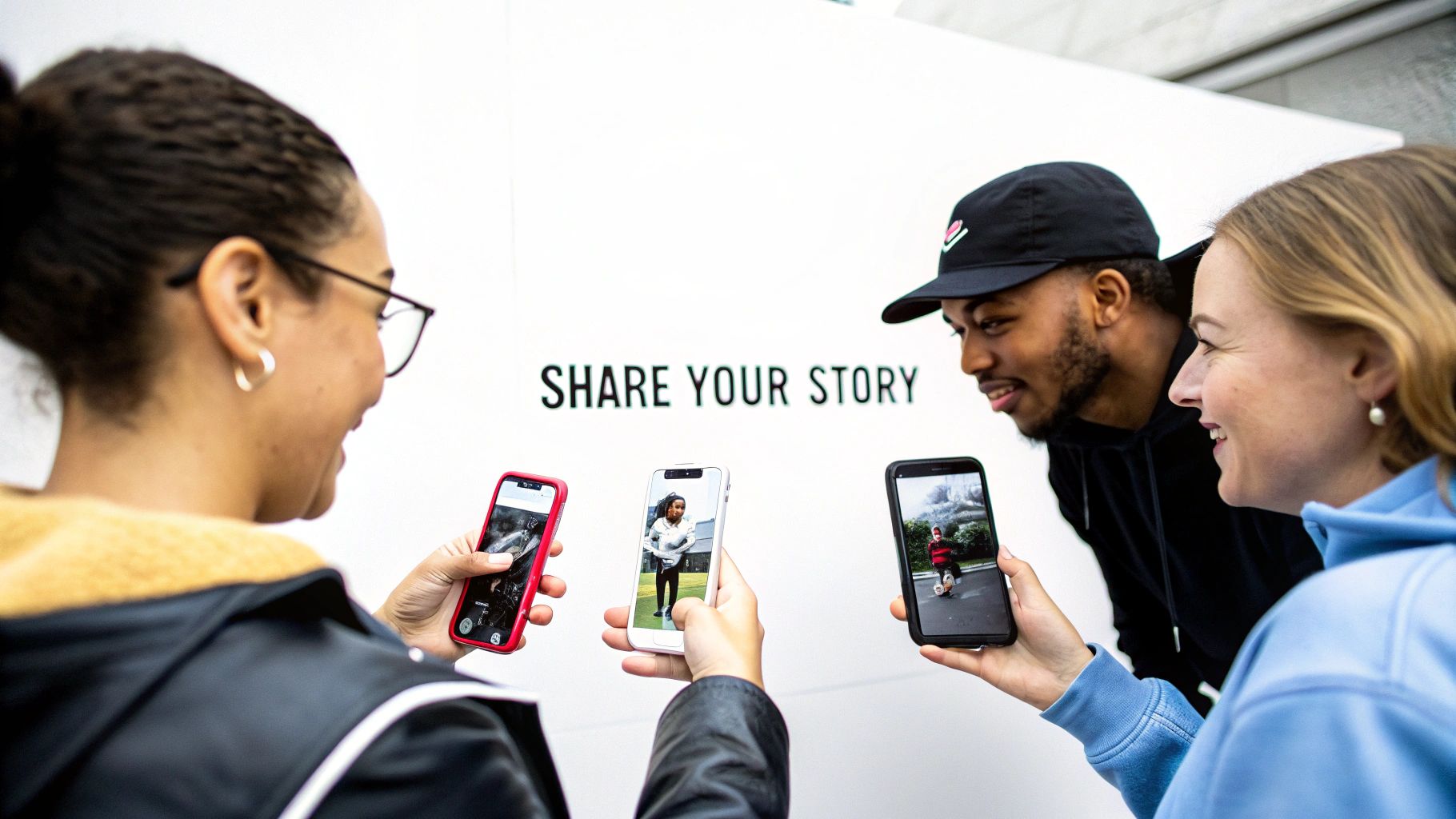
Iconic examples include GoPro’s #GoProAwards, which features breathtaking customer videos, and Starbucks' annual #RedCupContest, which generates massive engagement every holiday season. These campaigns succeed by making participation fun, accessible, and rewarding.
How to Implement a UGC Campaign
To launch your own UGC initiative, create a clear, memorable, and unique branded hashtag. This centralizes submissions and makes it easy to track entries across platforms like Instagram, TikTok, and X (formerly Twitter).
- Incentivize Participation: Offer compelling reasons for users to share their content. This could be a prize for the best submission, a feature on your official page, or exclusive discounts. Recognition is often as powerful a motivator as a physical prize.
- Set Clear Guidelines: Define what you’re looking for. Specify the theme, format (photo, video, Reel), and any essential elements, such as tagging your brand or using the specific hashtag.
- Always Ask for Permission: Before reposting any user's content, get their explicit consent. A simple direct message asking for permission to feature their post is standard practice and respects their ownership.
- Engage with Every Submission: Acknowledge participants by liking, commenting on, or sharing their posts. This positive reinforcement encourages more users to join in and strengthens community bonds.
For a deeper dive into crafting your next campaign, explore these powerful user-generated content strategies.
2. Influencer Partnerships and Collaborations
Influencer partnerships are a cornerstone of modern social media marketing, allowing brands to tap into the trust and reach of established content creators. This strategy involves collaborating with influencers whose followers align with your target audience, leveraging their credibility to promote your products or services authentically. It bypasses traditional advertising's noise, delivering your message through a trusted voice directly to an engaged community.
Iconic examples include Daniel Wellington, which built its brand by partnering with countless fashion influencers on Instagram, and Gymshark, which cultivated a loyal community by sponsoring fitness athletes and creators. These collaborations succeed because they feel less like ads and more like genuine recommendations from a trusted source.
How to Implement an Influencer Campaign
To launch a successful influencer collaboration, start by identifying creators who genuinely fit your brand's ethos, not just those with the largest follower counts.
- Prioritize Audience Alignment: Focus on influencers whose audience demographics and interests match your ideal customer profile. Micro-influencers often deliver higher engagement and ROI within niche markets.
- Establish Clear Guidelines: Create a detailed brief outlining campaign goals, key messages, deliverables, and content do's and don'ts. However, provide enough creative freedom for the influencer’s authentic voice to shine through.
- Track Performance with Unique Links: Use unique discount codes (e.g., "CREATOR15") or trackable affiliate links to measure the direct impact of each collaboration on traffic and sales.
- Build Long-Term Relationships: Shift from one-off campaigns to long-term partnerships. Sustained collaboration builds deeper authenticity and transforms influencers into genuine brand ambassadors.
3. Storytelling and Brand Narrative
Storytelling is one of the most timeless marketing ideas for social media because it builds an emotional connection that goes far beyond a simple transaction. This strategy involves weaving a compelling narrative around your brand, products, or company values. Instead of just selling a product, you’re sharing a purpose, a mission, and a journey, making your brand more relatable and memorable.
Iconic examples include Patagonia’s deep-rooted narrative of environmental activism, which is central to its brand identity, and TOMS Shoes’ foundational “One for One” mission. These brands don’t just sell products; they sell a story that customers want to be a part of, fostering immense loyalty.
How to Implement Brand Storytelling
To effectively use storytelling, you must identify your core narrative and consistently communicate it across all your social media platforms. Your story is what makes you unique.
- Humanize Your Brand: Make your founder and team visible and relatable. Share their passions, challenges, and the “why” behind the business. Behind-the-scenes content is excellent for this.
- Showcase Customer Transformations: Don't just show customers using your product; tell the story of how it solved a problem or improved their lives. Authentic testimonials and case studies are powerful narrative tools.
- Create Recurring Themes: Develop narrative pillars or recurring content series that reinforce your core message. Ben & Jerry’s consistently ties its content back to social justice issues, making its brand purpose clear.
- Leverage Video for Emotion: Use formats like Instagram Reels, TikTok videos, and YouTube Shorts to tell stories with maximum emotional impact. A short video can convey personality and purpose far more effectively than static text.
For more inspiration on building your brand’s voice, see these examples of powerful brand storytelling.
4. Interactive Content and Engagement
Interactive content is one of the most effective marketing ideas for social media because it transforms passive scrolling into active participation. This strategy involves creating content like polls, quizzes, contests, and interactive Q&As that require the user to take an action. By doing so, you dramatically increase engagement rates, gather valuable audience insights, and create more memorable brand experiences.
Famous examples include BuzzFeed's viral personality quizzes that dominate timelines and Sephora's virtual try-on technology that blends utility with interaction. These campaigns succeed by offering entertainment, utility, or a chance to share an opinion, making the audience feel seen and heard.
How to Implement Interactive Content
To start using interactive content, leverage the native features available on platforms like Instagram Stories (polls, quizzes, sliders) and X (polls). This makes participation seamless for your audience.
- Keep It Simple and Fun: Design quizzes and polls that are short, mobile-friendly, and easy to complete in a few seconds. The goal is low-friction engagement.
- Offer Real Value: Incentivize participation with meaningful rewards. This could be a giveaway entry for a contest, a discount code for completing a quiz, or simply featuring the best responses.
- Repurpose Audience Insights: Use the data from polls and quizzes to inform your content strategy. If users vote for "Product A" over "Product B," create more content about Product A.
- Engage with Responses: Actively reply to comments, Q&A submissions, and contest entries. This two-way communication shows your audience that you are listening and fosters a stronger community.
To complement your interactive content, explore these actionable social media engagement strategies that can significantly boost overall audience connection.
5. Video Content and Short-Form Video Marketing
Video, particularly short-form video, has become one of the most dominant marketing ideas for social media, capable of driving massive reach and engagement. This strategy focuses on creating brief, digestible clips (typically 15 seconds to 3 minutes) for platforms like TikTok, Instagram Reels, and YouTube Shorts. These platforms prioritize video in their algorithms, offering brands an unparalleled opportunity to capture attention and communicate their message dynamically.

Brands like Gymshark excel with quick fitness tutorials on Reels, while MrBeast leverages viral challenges in his YouTube Shorts to gain millions of views. The success of this format lies in its ability to be entertaining, educational, and highly shareable in a short amount of time, hooking viewers instantly.
How to Implement a Short-Form Video Strategy
To effectively leverage short-form video, focus on creating content that is native to the platform and optimized for mobile, vertical viewing. Consistency is key, as algorithms tend to favor accounts that post regularly.
- Hook Viewers Immediately: You have less than three seconds to grab attention. Start with a compelling visual, a bold statement, or an intriguing question to prevent users from scrolling past.
- Use Trending Audio: Incorporate trending sounds and music to increase your video's discoverability. Platforms like TikTok and Instagram boost content that uses popular audio, placing it in front of a wider audience.
- Add Captions for Accessibility: Design your videos to be understood with or without sound. Adding clear, on-screen captions makes your content accessible to everyone and effective for users viewing in public spaces.
- Repurpose Smartly: Create a core video and adapt it for different platforms. Tweak the captions, music, and text overlays to match the specific nuances of TikTok, Reels, and Shorts to maximize its impact.
For a deeper understanding of how video can drive traffic, discover these powerful strategies on how to use YouTube to market your website.
6. Community Building and Group Engagement
Community building is one of the most sustainable marketing ideas for social media because it transforms passive followers into a dedicated tribe of brand loyalists. This strategy focuses on creating dedicated spaces, like Facebook Groups or Discord servers, where customers can connect with each other and your brand on a deeper level. Fostering a strong community generates organic advocacy, invaluable feedback, and lasting customer relationships.
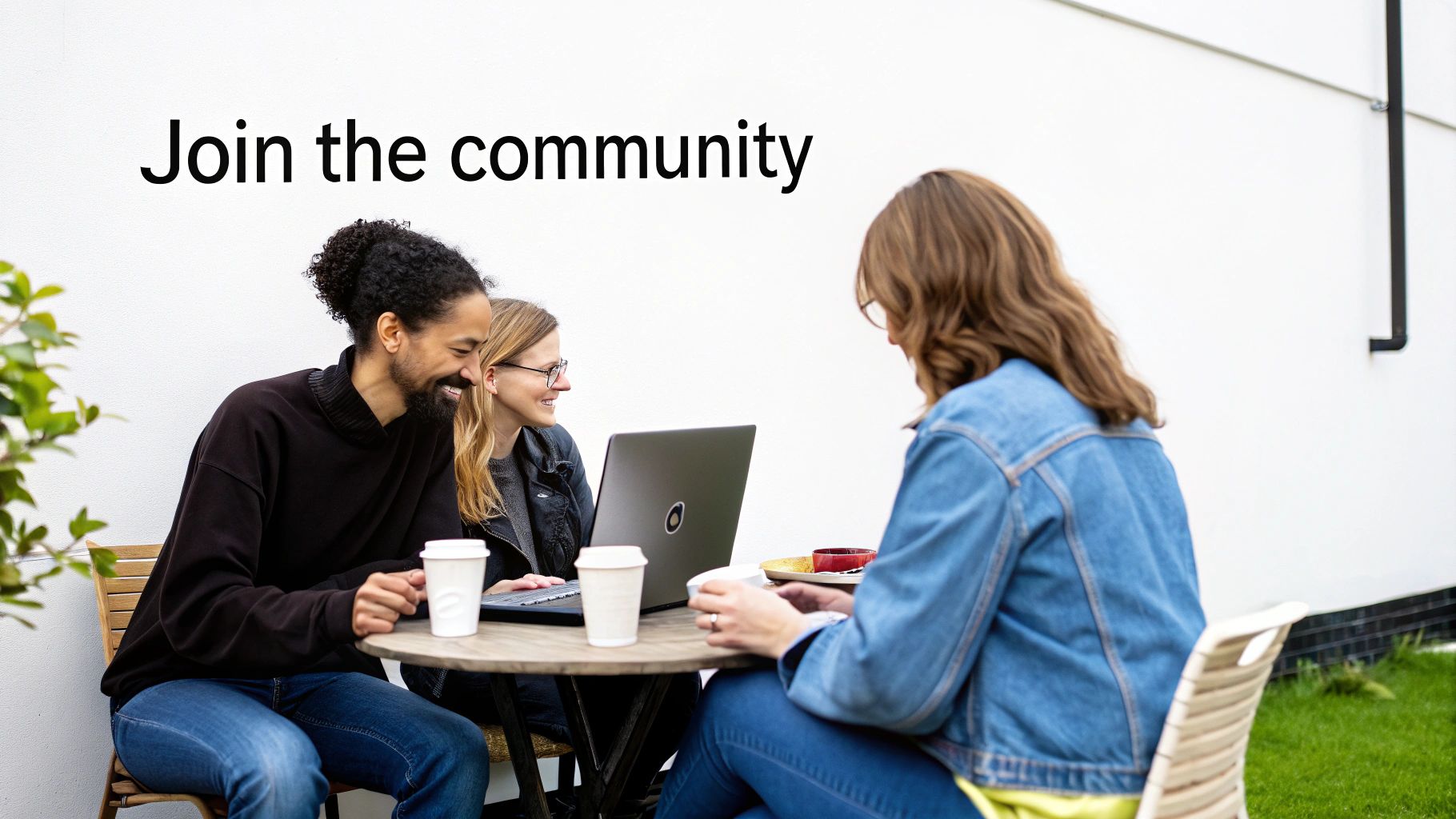
Prime examples include Peloton's highly engaged fitness community, which uses hashtags to organize group workouts, and Glossier's customer-centric groups that help shape product development. These brands succeed by creating an environment where members feel seen, heard, and connected through shared interests and values.
How to Implement Community Building
To start, choose a platform that aligns with your audience's habits, such as a private Facebook Group, a Slack channel, or a dedicated forum on your website. The goal is to create a sense of exclusivity and shared purpose.
- Establish Clear Guidelines: Create and pin a set of community rules and values to ensure a positive and respectful environment. Consistent moderation is key to maintaining a safe space.
- Be Actively Present: Don't just create the group and leave. Participate in discussions, answer questions, and initiate conversations. Your presence shows that you value the community.
- Celebrate Your Members: Regularly feature and celebrate active members. Acknowledge their contributions, share their success stories, and make them feel like valued partners in your brand's journey.
- Offer Exclusive Perks: Reward community members with exclusive content, early access to new products, special discounts, or member-only events. This incentivizes active participation and makes them feel special.
To learn more about nurturing an online following, review these essential community management skills.
7. Trending Hashtags and SEO Optimization
Strategically using hashtags is one of the most effective marketing ideas for social media because it functions as a form of SEO for these platforms. This approach involves researching and using relevant, trending, and niche hashtags to dramatically increase your content's discoverability. By attaching the right tags, you connect your posts directly with users actively searching for your topics, boosting reach and engagement.
The power of hashtags is clear in their universal application. Fashion brands have built entire communities around tags like #OOTD (Outfit of the Day), while TikTok's algorithm heavily favors content using #fyp or #ForYouPage. Similarly, a well-crafted branded hashtag like Glossier’s #GlossierGlowUp can centralize customer content into a powerful, searchable gallery.
How to Implement a Hashtag and SEO Strategy
The key to successful hashtag use is a balanced, research-driven approach. Instead of guessing, use social media analytics tools to identify which tags are performing well within your specific niche and among your target audience.
- Create a Hashtag Mix: Don't rely solely on popular tags with millions of posts. Combine broad, popular hashtags with moderately popular and highly specific niche hashtags to reach different audience segments.
- Develop a Branded Hashtag: Create a unique tag for your brand or a specific campaign. Encourage followers to use it to build a dedicated content hub that strengthens your brand identity.
- Optimize Placement: On Instagram, you can place hashtags in the caption or the first comment to maintain a clean look. On platforms like X (formerly Twitter) and LinkedIn, integrate them more naturally within the post text.
- Monitor and Adapt: Social media trends move quickly. Regularly review the performance of your hashtags and discard any that are outdated or underperforming. Stay alert to emerging trends to keep your content relevant.
For an in-depth guide on finding the perfect tags, check out these powerful hashtag research strategies.
8. Personalization and Direct Messaging
Personalization and Direct Messaging (DM) strategies move beyond broad-stroke marketing to create intimate, one-on-one connections with your audience. This approach uses customer data and automated tools like chatbots to deliver tailored content, recommendations, and support directly to a user's inbox. It transforms social media from a broadcast channel into a powerful tool for conversation, significantly boosting engagement, loyalty, and conversion rates.
Leading brands excel at this. Spotify's personalized "Wrapped" campaigns and weekly playlists make users feel understood, while Sephora uses AI-powered chatbots on platforms like Facebook Messenger to offer tailored beauty advice and product recommendations, driving sales through direct, helpful interactions.
How to Implement Personalization and DM
To successfully integrate this strategy, focus on delivering value, not just sales pitches. Use automation to handle initial queries and segmentation, but ensure a human touch is available for more complex needs.
- Start with Segmentation: Group your audience based on behavior, demographics, or purchase history. Use this to send relevant welcome messages, special offers, or content updates via DM.
- Utilize Chatbots for Instant Support: Implement a chatbot on platforms like Instagram or Facebook Messenger to answer frequently asked questions, track orders, or guide users to relevant products 24/7.
- Balance Automation with a Human Touch: While automation is efficient, know when to escalate a conversation to a human agent. Personalized, empathetic support for complex issues builds immense customer trust.
- Use Data Ethically and Transparently: Always be clear about how you are using customer data and obtain consent. Respecting privacy is crucial for maintaining a positive brand reputation and user trust.
For brands ready to build deeper connections, these social media messaging strategies can help you craft more effective and personalized campaigns.
9. Paid Social Media Advertising
Paid social media advertising is one of the most direct and scalable marketing ideas for social media, allowing you to reach highly specific audiences with precision. Unlike organic efforts that rely on algorithms, paid ads on platforms like Meta, LinkedIn, and TikTok guarantee your content gets in front of your ideal customers. This strategy is essential for driving conversions, accelerating brand awareness, and achieving measurable ROI quickly.
Brands like Glossier built their empires on hyper-targeted Instagram ads that spoke directly to millennial consumers, while Airbnb uses location-based campaigns to attract travelers. These examples prove that with the right strategy, paid social can deliver powerful results by connecting your message with people most likely to convert.
How to Implement Paid Social Media Advertising
To launch an effective paid social campaign, begin with a clear objective. Whether you want to generate leads, drive website traffic, or increase sales, your goal will dictate your campaign setup, creative, and budget.
- Define Your Audience and Objective: Start by defining a clear campaign goal (e.g., conversions, brand awareness) and use the platform’s detailed targeting options to build an audience based on demographics, interests, and behaviors.
- A/B Test Everything: Don't rely on a single ad. Create multiple versions of your ad creative, copy, and headlines to test which combination resonates best with your audience. Continuously optimize based on performance data.
- Install Tracking Pixels: Implement the Meta Pixel, TikTok Pixel, or LinkedIn Insight Tag on your website. This is crucial for tracking conversions, building retargeting audiences, and measuring your campaign’s true ROI.
- Monitor and Optimize: Regularly check your campaign performance against your key performance indicators (KPIs), such as Cost Per Acquisition (CPA) and Click-Through Rate (CTR). Adjust your budget, targeting, or creative to improve results.
10. Live Streaming and Real-Time Engagement
Live streaming is a dynamic social media marketing idea that connects you with your audience in real-time. By broadcasting live on platforms like Instagram, TikTok, and YouTube, you create an unscripted, authentic, and interactive experience. This immediacy builds trust, fosters a strong sense of community, and drives urgent engagement that pre-recorded content often can't match.
Brands like Sephora use live streams for interactive makeup tutorials and product launches, while Gymshark hosts Q&As and workout sessions to engage its fitness community. These events succeed because they offer genuine value and create a space for direct conversation, making followers feel seen and heard.
How to Implement Live Streaming
To host a successful live event, planning is key, but so is embracing spontaneity. Your goal is to create a two-way conversation, not just a one-way broadcast.
- Promote Your Stream in Advance: Build anticipation by announcing your live event across all channels. Use countdown timers on Instagram Stories and post reminders to maximize viewership when you go live.
- Have a Clear Agenda (and a Guest): Outline a loose structure for your stream, such as a Q&A, a product demo, or a tutorial. Inviting a guest or collaborator can introduce a new audience and make the conversation more dynamic.
- Engage with the Chat: Actively monitor comments and questions as they come in. Addressing viewers by name and responding to their input in real-time is crucial for building a strong connection.
- Repurpose the Content: After the stream ends, the content's life isn't over. Save the video and repurpose key moments, highlights, or valuable insights into shorter clips for Reels, Shorts, or evergreen social media posts.
For a comprehensive guide on getting started, review these live streaming tips for businesses to ensure your broadcast is a success.
11. Employee Advocacy and Internal Voices
Employee advocacy is a marketing idea for social media that transforms your team into a powerful extension of your marketing efforts. This strategy encourages employees to share company news, content, and personal insights on their own social media profiles. It humanizes your brand, amplifies your reach to new audiences, and builds trust through the authentic voices of the people behind your company.
When employees share content, it often receives significantly higher engagement than when shared from a corporate account. Companies like Salesforce and Microsoft excel at this, showcasing their employees' expertise on platforms like LinkedIn and highlighting their vibrant company culture, which in turn attracts top talent and new customers.
How to Implement an Employee Advocacy Program
To launch an effective employee advocacy program, focus on making participation easy, voluntary, and rewarding. The goal is to empower your team, not mandate their involvement.
- Provide Shareable Content: Create a central hub with pre-approved articles, graphics, and post templates that employees can easily access and customize. Tools like GaggleAMP or EveryoneSocial can streamline this process.
- Offer Clear Guidelines and Training: Equip your team with social media best practices. Explain your brand’s voice, do's and don'ts, and disclosure requirements to ensure consistency and transparency.
- Incentivize and Recognize Participation: Acknowledge top advocates through shout-outs in company meetings, on internal channels, or with small rewards like gift cards. A little recognition goes a long way in motivating your team.
- Showcase Employee Stories: Move beyond just sharing company news. Feature employee spotlights, career journeys, and personal achievements to put a human face on your brand and make the content more relatable.
12. Data Analytics and Performance Measurement
Data analytics and performance measurement are essential marketing ideas for social media that transform your strategy from guesswork into a science. This approach involves using analytics tools to track campaign performance, understand audience behavior, and calculate return on investment (ROI). A data-driven strategy enables continuous optimization, proves the value of your social media efforts, and ensures your resources are allocated effectively.
Platforms like HubSpot and Sprout Social offer comprehensive dashboards that turn raw numbers into actionable insights. They allow marketers to see which content resonates, what demographics are most engaged, and how social activities translate into website traffic and leads. This moves beyond vanity metrics to focus on what truly drives business growth.
How to Implement Data Analytics
To effectively measure performance, you must first define what success looks like for your brand. Start by setting clear objectives and key performance indicators (KPIs) before launching any campaign.
- Define Clear KPIs: Establish specific goals. Are you aiming for increased brand awareness (reach, impressions), higher engagement (likes, comments, shares), or more conversions (clicks, leads, sales)?
- Use UTM Parameters: Track exactly where your website traffic comes from by adding UTM codes to the links you share on social media. This is crucial for accurate attribution in tools like Google Analytics.
- Track Consistently: Monitor your metrics regularly, not just at the end of a campaign. Consistent tracking helps you spot trends, identify what’s working, and pivot your strategy quickly when needed.
- Analyze Both Vanity and Actionable Metrics: While likes are nice (vanity metrics), focus on data that informs business decisions, such as click-through rates, conversion rates, and cost per acquisition (actionable metrics).
For a complete guide on connecting social media efforts to business results, discover more about how to measure social media ROI.
12 Social Media Marketing Ideas Comparison
| Strategy | 🔄 Implementation Complexity | ⚡ Resource Requirements | 📊 Expected Outcomes | 💡 Ideal Use Cases | ⭐ Key Advantages |
|---|---|---|---|---|---|
| User-Generated Content (UGC) Campaigns | 🔄 Moderate — ongoing moderation & curation needed | ⚡ Low–Medium — incentives and community management | 📊 High engagement & trust; inconsistent volume | 💡 Brand awareness, community-building, social proof drives | ⭐ Authenticity, cost-efficient content, strong social proof |
| Influencer Partnerships and Collaborations | 🔄 Medium — contracts, brief approvals, coordination | ⚡ Medium–High — influencer fees and management | 📊 Rapid reach and credibility; ROI varies by partner | 💡 Product launches, niche targeting, trend amplification | ⭐ Access to engaged audiences and professional content |
| Storytelling and Brand Narrative | 🔄 High — requires consistent, high-quality content | ⚡ Medium — creative resources and time investment | 📊 Strong long-term loyalty, recall, differentiation | 💡 Brand positioning, mission-driven campaigns, loyalty-building | ⭐ Emotional connection and brand differentiation |
| Interactive Content and Engagement | 🔄 Medium — creative design plus moderation | ⚡ Medium — tools, designers, time to manage interactions | 📊 Immediate engagement lift and actionable audience insights | 💡 Engagement campaigns, data collection, viral potential | ⭐ High engagement, shareability, direct feedback |
| Video Content and Short-Form Video Marketing | 🔄 Medium — fast production cycles and trend monitoring | ⚡ Medium — creators, editing tools; can be low-cost authentic | 📊 Very high reach and virality potential; platform-favored | 💡 Awareness, tutorials, trend participation, demos | ⭐ Highest engagement rates; repurposable across platforms |
| Community Building and Group Engagement | 🔄 High — sustained moderation and facilitation | ⚡ Medium — community managers, events, platform tools | 📊 Strong retention, advocacy, and referral-driven growth | 💡 Loyalty programs, niche communities, product feedback loops | ⭐ Deep brand advocates and continuous customer insights |
| Trending Hashtags and SEO Optimization | 🔄 Low — ongoing research and monitoring | ⚡ Low — analytics tools and consistent posting effort | 📊 Improved discoverability; short-term trend boosts | 💡 Increasing reach, trend participation, discoverability | ⭐ Low-cost visibility and scalable reach improvements |
| Personalization and Direct Messaging | 🔄 High — data integration, privacy, and compliance | ⚡ High — CRM, AI/chatbots, data engineering | 📊 Higher conversions and improved customer retention when done well | 💡 Retention, conversion optimization, customer support | ⭐ Personalized experiences that increase conversion and loyalty |
| Paid Social Media Advertising | 🔄 Medium — setup, targeting, and constant optimization | ⚡ High — ad spend plus specialist skills/tools | 📊 Fast, measurable reach and conversions; scalable by budget | 💡 Rapid acquisition, retargeting, performance-driven campaigns | ⭐ Precise targeting and clear ROI attribution |
| Live Streaming and Real-Time Engagement | 🔄 Medium — technical setup and live moderation | ⚡ Medium — equipment, hosts, moderators | 📊 High authenticity and immediate engagement; viewership varies | 💡 Product launches, demos, live shopping, Q&A | ⭐ Real-time interaction, urgency (FOMO), repurposable clips |
| Employee Advocacy and Internal Voices | 🔄 Low–Medium — program setup, training, guidelines | ⚡ Low — content toolkits and voluntary participation | 📊 Extended organic reach and increased trust | 💡 Employer branding, authentic storytelling, recruitment | ⭐ Humanizes brand and leverages trusted personal networks |
| Data Analytics and Performance Measurement | 🔄 Medium — tool setup and analytical expertise | ⚡ Medium — subscriptions and analyst time | 📊 Actionable insights, clear ROI measurement, optimization guidance | 💡 Campaign optimization, budget allocation, reporting | ⭐ Data-driven decisions and measurable performance improvements |
Automate Your Success and Put Your Ideas into Action
You now have a comprehensive playbook filled with powerful marketing ideas for social media, designed to elevate your brand's presence and drive meaningful results. We've explored a wide spectrum of strategies, from harnessing the authentic voice of your customers through User-Generated Content to leveraging the precision of paid advertising. Each idea, whether it’s building a vibrant community, launching an interactive poll, or partnering with an influential creator, represents a unique opportunity to connect with your audience on a deeper level.
However, the difference between a list of good ideas and a successful social media strategy lies in one crucial element: consistent execution. The digital landscape is relentless, and maintaining momentum can feel like a monumental task. This is where strategic automation becomes your greatest ally, transforming your brilliant concepts from a wish list into a sustainable, high-impact marketing engine.
From Ideas to Impact: The Power of a System
The most effective social media managers don't just work harder; they work smarter. They build systems that handle the repetitive tasks, freeing up their creative energy for high-value activities like real-time engagement, live streaming, and analyzing performance data. Think about the evergreen content you’ve created: insightful blog posts, powerful customer testimonials, compelling video tutorials, and inspiring brand stories. These assets shouldn't be posted once and forgotten. They are valuable resources that can continue to educate, entertain, and convert your audience for months or even years.
By implementing an evergreen posting workflow, you ensure a steady stream of high-quality content populates your feeds, keeping your brand top-of-mind. This automated baseline activity accomplishes several key goals:
- Maximizes Content ROI: Every piece of content you create is an investment. Automation ensures you get the maximum possible return by putting it in front of new audience members over time.
- Maintains Consistency: It guarantees your profiles remain active and valuable, even during busy periods when you're focused on launching a new product or managing a major campaign.
- Frees Up Creative Resources: When your foundational content is scheduled automatically, you and your team can focus on the timely, interactive, and community-building marketing ideas for social media that require a human touch.
Your Action Plan for Sustainable Growth
To truly operationalize the ideas in this guide, your next steps should focus on building a sustainable system. Don’t let this wealth of information lead to overwhelm. Instead, take a structured approach to implementation.
- Identify Your Evergreen Content: Review your existing content and tag the posts that are timeless and consistently perform well. This could include how-to guides, foundational brand pillars, frequently asked questions, and top-performing UGC.
- Choose Your Core Strategies: You don’t need to implement all twelve ideas at once. Select two or three that align most closely with your current business goals. Perhaps you'll focus on community building and short-form video for the next quarter.
- Integrate Automation: Set up a system to automatically recycle your identified evergreen content. This creates the "always-on" foundation of your social media presence, giving you the bandwidth to execute your chosen core strategies with excellence.
Ultimately, mastering social media marketing isn't just about having a flash of creative genius. It's about combining that creativity with a robust, reliable system that ensures your message is heard consistently. By automating your best content, you create the space and time needed to innovate, engage, and build genuine relationships with your audience, turning fleeting online moments into lasting brand loyalty.
Ready to stop the manual grind of reposting and put your content to work? EvergreenFeed integrates with Buffer to automatically recycle your best-performing posts, ensuring your audience never misses your most valuable content. Start building your automated social media engine today and unlock more time to focus on growth by visiting EvergreenFeed.